



 Back to news listing
 Dust Allergy: Causes, Symptoms, and Effective Prevention
News

Dust Allergy: Causes, Symptoms, and Effective Prevention
In recent years, air quality in major cities has deteriorated significantly, leading to a sharp rise in dust allergy cases. This condition not only causes daily discomfort but also negatively affects respiratory health, skin, and eyes, becoming a growing public health concern.
This article explains what dust allergy is, common causes, typical symptoms, and practical prevention measures to help protect your health and improve quality of life.
What Is Dust Allergy?
Dust allergy occurs when the immune system overreacts to microscopic particles in the environment, such as:
Fine dust particles
Pollen
Mold spores
House dust mites
Pet dander
Upon exposure, the body releases histamine, triggering allergic reactions that affect the respiratory system, skin, and eyes.
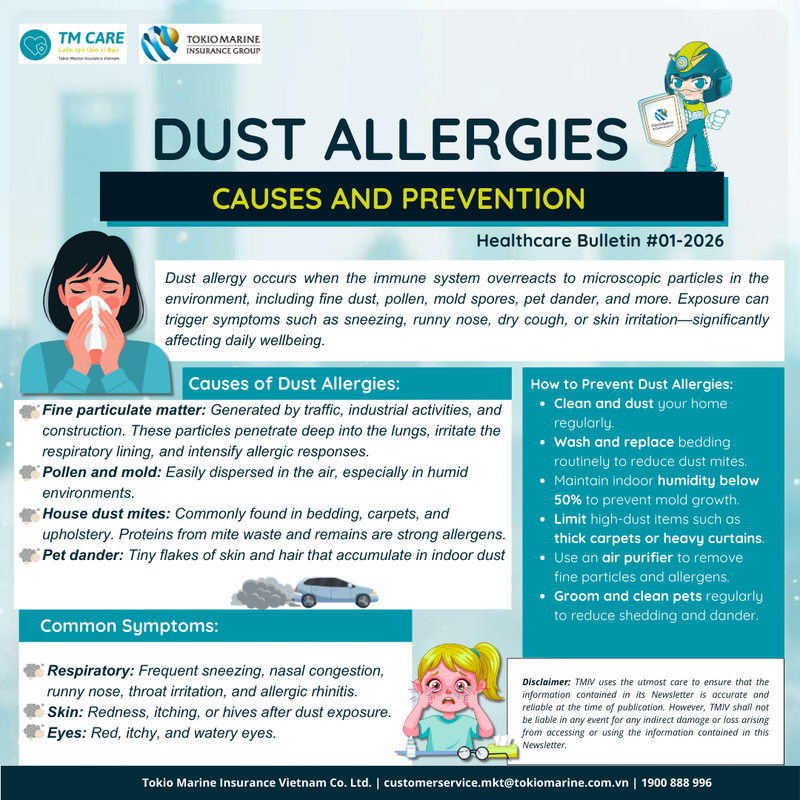
Common Causes of Dust Allergy Today
1. Fine Particulate Matter (PM2.5 and PM10)
These ultrafine particles are generated by:
Urban traffic
Industrial activities
Construction sites
They can penetrate deep into the lungs, irritate the respiratory lining, and intensify allergic responses.
2. Pollen and Mold
Pollen spreads easily through the air, especially during seasonal changes.
Mold thrives in humid, poorly ventilated environments.
Both are common airborne allergens.
3. House Dust Mites
Dust mites are commonly found in:
Bedding (pillows, blankets, mattresses)
Carpets, curtains, and upholstered furniture
Proteins in their waste and remains are strong allergens, particularly for children and people with sensitive immune systems.
4. Pet Dander
Tiny flakes of skin and hair shed by pets can accumulate in indoor dust and remain airborne for long periods, triggering allergic reactions.
Common Symptoms of Dust Allergy
Respiratory Symptoms
Frequent sneezing
Nasal congestion or runny nose
Dry cough and throat irritation
Allergic rhinitis
Skin Symptoms
Itching and redness
Hives
Skin irritation after dust exposure
Eye Symptoms
Red, itchy eyes
Watery eyes
Burning or discomfort
Symptoms may range from mild to severe, depending on exposure levels and individual sensitivity.
Effective Ways to Prevent Dust Allergy
1. Clean Your Home Regularly
Wipe surfaces and vacuum frequently
Use vacuum cleaners with HEPA filters
2. Wash and Replace Bedding Routinely
Wash bedding regularly, preferably with hot water
Reduce dust mite buildup in sleeping areas
3. Control Indoor Humidity
Keep indoor humidity below 50%
Use dehumidifiers in damp areas
4. Reduce Dust-Collecting Items
Limit thick carpets and heavy curtains
Choose easy-to-clean furniture and materials
5. Use an Air Purifier
Helps remove fine particles, pollen, and allergens
Especially beneficial in urban living environments
6. Maintain Pet Hygiene
Bathe and groom pets regularly
Clean pet living areas to minimize shedding and dander
Conclusion
Dust allergy is becoming increasingly common as air pollution levels rise. By understanding its causes, recognizing symptoms early, and applying preventive measures consistently, you can significantly reduce allergy risks and protect your long-term health.
👉 Take action today by creating a cleaner, healthier living environment for yourself and your family.